
Vital Signs Copywriter Endorsement & Turnover Guide
1. The Copyreader's Role: What You Actually Do
Mia, this is your working handover for the Vital Signs Copyreader role. You are the last editorial check before the publication puts its name on an article, caption, or graphic. That means you read for more than grammar: you protect the facts, the logic, the voice, and the final version people will actually see.
Start here. If a material looks polished but feels wrong, trust that instinct and investigate. Good copyreading is not about being picky; it is about making sure Vital Signs can stand behind what it publishes.
| You Are Responsible For | That Means | It Does Not Mean |
|---|---|---|
| The last editorial check before Vital Signs puts its name on a material. | Checking the story, the caption, the design, the footer, the credit, and the final version, not just correcting typos. | Being only a spell-checker, or waiting for permission to correct a clear issue that affects accuracy or readability. |
What the Role Actually Asks of You
For articles, start with the story before you start correcting sentences. Read it once as an ordinary reader. What is it trying to say? Does the sequence make sense? Is there enough context for someone who was not there? If you cannot answer those questions, the draft is not ready yet, even if the grammar looks clean.
- Facts come before polish. Verify names, positions, dates, venues, event titles, numbers, awards, and official terms against a program, recording, published coverage, or another reliable source.
- Treat smooth writing with caution. AI-assisted drafts can sound confident while getting the event, the organization, or the details completely wrong. Never approve a fact just because the sentence sounds good.
- Quotes need proof. Use quotation marks only for words that can be checked word for word. If you cannot verify a line, paraphrase it honestly.
- Read for logic. A sentence can be correct on its own and still contradict the rest of the article, lose the timeline, or make the wrong point. Fix the thought, not just the punctuation.
- Use the exact term that the College or event uses. Do not borrow a designation from another school. If the material says Cum Laude, do not replace it with valedictorian just because it sounds familiar.
Edit Like an Editor, Not a Spell-Checker
You have permission to change a line that does not work. If the wording is awkward, repetitive, vague, or missing the point, rewrite it. If the draft is too thin to carry the story, add the context that is clearly needed, then explain the change to the writer. The goal is not to preserve every original sentence; it is to help the piece come out clear, fair, and readable.
| When You Notice | Do This in the Draft | A Useful Note to Leave the Writer |
|---|---|---|
| A fact is missing or does not match the source. | Flag it, check the official material, and correct it only when the source supports the change. | “Please verify the venue and official event title against the program before finalising this paragraph.” |
| A quotation cannot be traced to a recording, program, or reliable source. | Remove the quotation marks and paraphrase the idea, or ask the writer to provide a source. | “Please confirm this wording word for word. If there is no source, we should paraphrase instead.” |
| A sentence is grammatical but vague, repetitive, or hard to follow. | Rewrite the line for clarity, then leave a short note only if the writer can learn from the change. | “I tightened this because the original repeated ‘journey’ and did not say what the graduates were doing next.” |
How to Give an Edit That Helps the Writer
- Keep feedback where the writer can see it: in the working document, beside the issue, with a clean copyedited version below or within the draft.
- Explain corrections that keep repeating. A short note about why something changed will help more than silently fixing the same error every time.
- Be direct without being cruel. Writers are still learning, and some will need substantial edits. The standard stays high; the feedback stays useful.
- Add the credit when you have copyedited the material:
Copyedited by Mia Martinez.
Fast Turnaround: Short Lang Yung Time, Copywrite Agad
Turnaround is fast. Never sit on drafts waiting for the deadline. As soon as a writer submits their draft in Google Docs or drops a caption in Messenger, copywrite it right away. If you wait until the general deadline, 15 to 20 articles will pile up in your inbox at the exact same moment right when the layout team is waiting on you to budget their spreads.
2. Grammar and Sentence-Level Editing
Grammar is not a separate job from copyediting. It is part of making a sentence say exactly what it needs to say. You do not have to turn every line into something formal or complicated; you just have to make sure the sentence is complete, accurate, and easy to read on the first pass.
Subject-Verb Agreement: Find the Real Subject
The verb has to agree with the subject, not with the noun sitting closest to it. This is where many clean-looking drafts go wrong. Find the main person, thing, or group doing the action, then check whether the verb matches it.
- Ignore phrases that come between the subject and verb. In “The list of captions is ready,” the subject is list, not captions.
- Watch singular words that refer to many people: each, every, either, neither, everyone, and one. “Each of the writers has submitted a draft” is singular.
- Use plural verbs for plural subjects. Because two things are being described, write “The caption and pubmat are ready,” not “The caption and pubmat is ready.”
- In sentences that begin with there, look at the noun after the verb: “There are three posts for approval,” not “There is three posts.”
- Treat a group as singular when it acts as one unit: “The Editorial Board has approved the schedule.” If the sentence is about individual members acting separately, rewrite it so that is clear.
| Draft (Avoid) | Copyedited (Use) | What to Notice |
|---|---|---|
| The list of captions are ready. | The list of captions is ready. | The subject is list, not captions. |
| Each of the writers have sent their draft. | Each of the writers has sent a draft. | Each is singular. |
| There is three posts for approval. | There are three posts for approval. | The verb agrees with posts. |
| After reviewing the article, the caption was posted. | After reviewing the article, the copyeditor posted the caption. | The person reviewing must be named (fixes dangling modifier). |
| The post invites students to join, attend, and sharing. | The post invites students to join, attend, and share. | Keep items in a series parallel. |
Keep Tense, Time, and Sequence Steady
- Tell a completed event in the past tense. Keep it there unless you are stating a continuing truth or quoting someone.
- Do not jump from past to present without a reason. “The program opened with a message from the dean, who reminds students…” should usually be “who reminded students…” when the whole account is in the past.
- Be careful with time markers. “Today,” “yesterday,” and “this year” can age badly in captions. Use the actual date when readers need a lasting point of reference.
Make the Actor and Meaning Clear
- Do not let pronouns hide who you mean. “Mia spoke with the writer after she received feedback” can point to either person. Name the person again if there is any doubt.
- Fix dangling modifiers. Name who performed the action directly.
- Keep parallel ideas in the same form. “The workshop taught students to report, verify, and edit” is cleaner than mixing “to report, verifying, and editing.”
- Prefer the clearest active sentence when it matters who did something. “The SSC opened the program” is stronger and more specific than “The program was opened.”
Punctuation, Names, and Small Details
- Use punctuation to guide a reader through the sentence. Add a comma after a long introductory phrase, around nonessential information, and after a full date when the sentence continues: “On August 3, 2026, the program opened at the Velez Gym.”
- Check apostrophes and plural forms carefully. “Velez College’s history” is possessive; “Velezians” is simply plural and needs no apostrophe (never write “Velezian students”).
- Do not use a comma to glue together two complete sentences. Split the sentence, use a semicolon, or add a conjunction.
- Watch capitalization in titles, organizations, programs, and academic designations. When in doubt, check the official material rather than relying on habit. Then read the line aloud once: if you stumble, the reader probably will too.
3. Headlines and Event Titles: No Fragments, No Clickbait
The headline is what stops people scrolling. But a headline must be real language with a clear grammatical subject, an active verb, and context. It cannot be an orphaned fragment just because it looks pretty in a graphic.
The Velezchella Example: Why Fragments Get Rejected
During summer mentoring, a draft came in titled: “Day 3: Ends with a Resounding Applause.”
Why was it rejected? Because it has no grammatical subject. Who ended it? What ended? An incomplete fragment looks sloppy. We rewrote it with a clear actor: “Velezchella Day 3: Student Body Concludes Annual Festival with Campus Concert.”
Core Headline Rules
- Always have a clear subject: Never publish an action without an actor. The reader must know immediately who organized, competed, won, or spoke.
- Use strong active verbs: Replace passive labels with decisive verbs. Prefer “Velezian Clinicians Secure Top 7 Spot” over “Securing of Top Spot by Clinicians.”
- Follow house category format: For campus events, use
[Event Name] | [Day or Part]: [Active Headline]. - The title must make sense on its own: Never assume the reader will look at the pubmat image to figure out what the headline means.
| Draft Headline (Avoid) | Copyedited Headline (Use) | What Was Fixed |
|---|---|---|
| Day 3: Ends with a Resounding Applause | Velezchella Day 3: Student Body Celebrates Final Night with Concert | Supplied explicit subject and active setting. |
| Commencement Rites Held Yesterday | Velez College Confers Degrees on 641 Graduates at NUSTAR Grand Ballroom | Replaced weak passive verb with specific count, official venue, and active verb. |
| MedTech Topnotchers Inspiring Journey | Velezian Clinicians Clinch Top 7 in Medical Technology Licensure Examination | Removed generic emotional filler and anchored in factual achievement. |
5. Pictures, Pubmats, and Other Visual Materials
Copyreading does not end at the caption. A pubmat can create a new error after the text has already been approved, especially in small details that are easy to miss.
Read the Whole Graphic
- Read every visible word, including the headline, subheadings, labels, credits, captions, dates, times, venues, names, titles, text near logos, and tiny footer text.
- Check whether line breaks, spacing, alignment, and visual hierarchy make the message easier or harder to understand.
- Compare the graphic against the caption, link, article, and real event details. The name, date, call to action, and organization should match across all of them.
- Review at final size. Do not approve a pubmat just because the biggest text looks good on a laptop screen.
The Footer Is Part of the Job
Never skip the footer. It is small, but it still carries the publication’s identity. Check it on the final exported material, not only on the designer’s draft. Check handles, account names, email addresses, links, logos, credits, and contrast for completeness and readability.
| Official Pubmat Footer Banner | Official Photo Credit Watermark |
|---|---|

Check: vitalsignsvc, vitalsignswriters@gmail.com, social icons, contrast, and complete visibility. |
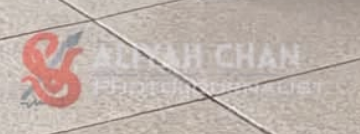
Check: approved Vital Signs mark, readable placement, correct crop, and no loss of footer against background. |
Be Strict About Images
Treat a visual like factual material. It should match the event, the people, and the message. If an image feels suspicious, heavily manipulated, or possibly AI-generated, ask for clarification or a source image. Real campus photos only. Do the last visual check on the final approved output; design changes can introduce a fresh typo, crop, or mismatch at the very end.
6. Publication Planning, Topic Input, and the EB Tracker
Do not wait quietly for assignments. You see enough drafts to notice what the publication is missing: a campus concern that no one has explained, a student worth profiling, a recurring problem, a strong photo story, or an event that deserves more than a routine caption. Say it. A copyreader should have a voice in what Vital Signs covers.
- Pitch the idea early, while the EB can still choose the right writer and prepare interviews.
- Bring more than a title: suggest an angle, possible sources, why it matters now, and the format that fits it best.
- Ask the questions that make a topic stronger: Who needs to be heard? What needs to be verified? Is this a newsletter story, a magazine feature, an opinion piece, a photo story, or a social media post?
Historical Magazine Provenance: The Timeline Before Our Term
To understand the scope of our publication, take note of our history:
In previous school years, Vital Signs always published an annual magazine. It was strictly the single school year immediately before our term (the year before us, SY 2024-2025) that had no magazine and no newsletters. When our batch stepped up, we broke that drought, revived the annual magazine, introduced monthly newsletters from September through March Intramurals, standardized pubmat footers and photo watermarks, and built a shared Google Drive tracker so nobody was left guessing what to write.
Editorial Tracker Link: Access the Editorial Board Tracker (Google Sheets). Update it whenever a story moves forward. Duplicate the previous tracker for the new school year so the old EB’s record stays intact.
Newsletter Assignment Tracker Template
| Story / Working Title | Type and Scope | Writer(s) Assigned | Interview | Word Guide | Status, Deadline, and Notes |
|---|---|---|---|---|---|
| [Working title] | Main article, outside-school activity or investigative feature | Pair or triad | Recommended | 450 to 500 words | Planned / assigned / draft received / copyedited / final layout / published |
| [Working title] | Minor article, school-wide activity or departmental beat | Solo or pair | Depends on topic | 250 to 300 words | Record deadline, document link, interview source, and next action |
Magazine Flow Tracker: Seven Core Sections
| Magazine Section | Planned Content / Coverage |
|---|---|
| Front matter | Cover page; Editor’s Note |
| The Year in Review | “The Year That Was” and a month-by-month timeline spotlight |
| Campus Pulse | 3 to 5 major features, student opinion, photo story, and creative work |
| Intramurals | Main feature, game highlights, team spotlights, and photo highlights |
| People of Velez | Student and faculty spotlights, ideally with representation from each department |
| Special Features | Long-form and thematic pieces that examine student life or growth |
| Incoming EB and closing | Introduction to the next EB, EB note, full staff list, and back matter |
7. A Working Copyediting Routine: The Six-Pass System
Use the same order every time. It protects you from missing something when the workload gets heavy.
| Pass | Focus | Question to Ask Yourself |
|---|---|---|
| 1 | Meaning | What is this material saying, who is it for, and what should the reader know or do? |
| 2 | Facts | Are the names, dates, titles, numbers, quotations, and official terms supported by a source? |
| 3 | Copy | Are the grammar, logic, tone, transitions, and word choices clear and natural? |
| 4 | Format | Does the material follow the right format, clean newsletter copy or Messenger-ready social copy? |
| 5 | Final output | Do the caption, graphic, footer, links, image, credits, and call to action agree with one another? |
| 6 | Last read | Did a revision or design change introduce a fresh error after your first review? |
Return the edit clearly once the passes are complete. Leave a useful comment when a writer needs to learn from the correction, then send back the clean version. Never assume the job is finished until you have read the final version after revisions or design changes; that is when missing credit, broken links, and new typos usually show up.
8. Things That Cause Real Problems
These are the situations that cause actual errors in student publications. Keep your guard up whenever you encounter them:
The draft is polished, so everyone trusts it
That is exactly when you should slow down. AI-generated or AI-assisted writing can sound professional while inventing a group, changing a fact, or giving someone the wrong title. Verify it anyway.
The caption is grammatical, but it still does not work
Grammar is only one part of the job. Change anything that is vague, awkward, repetitive, incomplete, or likely to confuse readers. If a post needs the what, where, or when, do not let it go up without them.
The team edits the design after your review
Check the final version again. A new line break, a moved footer, a wrong caption, or a missing word can appear after a layout change in Canva or InDesign.
Credit disappears at posting time
Your work should be acknowledged. Make sure the material says Copyedited by Mia Martinez when you copyedited it. If the credit is removed, ask for it to be returned.
The post is too formatted to read
Fancy Text, all caps, emojis, and bolding should help the message breathe. If they make the caption feel busy, pull back. A good post is clear before it is styled.
9. Summer Mentoring Lessons: Real Advice for Mia
Our Year Was About Stability; Yours Should Be About Innovation
Mia, our year was about getting things running; yours should be about pushing them forward.
In previous school years, Vital Signs always published an annual magazine. It was strictly the single school year immediately before our term (the year before us, SY 2024-2025) that had no magazine and no newsletters. When our batch stepped up, we had to rebuild the workflow: organizing messy Google Drive folders, introducing monthly newsletters from September through March Intramurals, reviving the full annual magazine, standardizing official pubmat footers, and restoring our credibility with OSSA and students.
You inherit that working foundation. You don’t have to start from zero. That means your year can focus on bolder story angles, taking creative risks in magazine folios, and trying fresh social formats.
Five Practical Lessons from Our Summer Chats
- Short lang yung time: copywrite agad. Never let drafts sit waiting for the general deadline. Edit as soon as a writer turns something in so 15 to 20 articles don’t flood your queue all at once when layout is waiting.
- Fast turnaround in Messenger. When writers or the socmed team send you captions in Messenger, review the text quickly against the pubmat, format the fonts, and return the clean version right away in chat so they can post on time.
- I highly recommend that you also write articles. Do not spend your whole term only editing others. Reporting your own stories keeps your writing sharp and reminds you what it feels like to be on the writer’s side of an edit.
- Trust your ear. If a sentence feels awkward, stiff, or sounds like robotic AI fluff when read aloud, rewrite it. A good post is clear before it is styled.
- Find and train a junior early. Look for one reliable writer early in the school year who shows genuine care for grammar and factual detail. Mentor them through social captions. Having a trained junior makes busy publication weeks far more manageable and prevents burnout when your 3rd year nursing hospital duties get heavy.
10. Before You Approve Anything: Checklists & Final Note
Before authorizing the release of any material, run through these final verification checklists:
Checklist A: Articles / Newsletter / Magazine
- The facts, names, dates, numbers, official terms, and quotations are accurate.
- The story makes sense from beginning to end, with no missing context, contradiction, or weak transition.
- The writing has been edited for grammar, clarity, structure, tone, redundancy, and readability.
- The writer can see the important corrections and the copyedited version is in the working document.
- The final layout, captions, visual labels, photographs, and embedded text have been checked.
- Images are relevant and credible, and the copyediting credit is present before the Writer Head deadline.
Checklist B: Social Media
- The caption is clear, complete, accurate, and recognizably in the Vital Signs voice.
- The what, where, when, dates, times, names, venues, and official terms are right.
- Quotes are verified; unsupported or AI-generated details have been checked.
- The title is complete, the wording is natural, and there is no needless repetition or vague time marker.
- The final version has been checked in Messenger and the Fancy Text is readable on Facebook.
- The links, hashtags, call to action, and Copyedited by Mia Martinez credit are correct.
Checklist C: Pubmats / Visual Materials
- Every word, including the small text, has been read at final size.
- The graphic matches the caption, article, event details, and Vital Signs identity.
- The footer is complete, correct, readable, and not cropped.
- The line breaks and layout do not hide or change the message.
- The visual is relevant, credible, and free of unresolved signs of AI generation or manipulation.
- The final exported version, not only the draft, has been checked.
Final Note from Charles to Mia
Final note: In previous school years, Vital Signs always published an annual magazine. It was strictly the single school year before us (SY 2024-2025) that had no magazine and no newsletters. We broke that dry spell, revived the magazine, and built a sustainable workflow so you could take over with confidence. Be thorough, be fair, and be confident in making the changes a material needs. The work can be demanding, but the care you put into it will show in every issue, caption, and story that carries the Vital Signs name.